The Highest Demand Jobs in 2026 (Not in Order!)

Dini Qistina Rashid
December 8, 2025
• The job market in 2026 is driven by skills, not just exam results. Employers value critical thinking, adaptability, and confidence with technology.
• Data, cybersecurity, digital marketing, and telemedicine are among the strongest growth areas because every industry is going digital.
• AI and automation are creating new opportunities. They remove routine tasks so that workers can focus on analysis, problem-solving, and decision-making, but human judgment still matters.
• Students who understand these trends can choose better subjects, build the right digital skills, and plan a career that stays relevant in a fast-changing world.
If you suddenly draw a blank when people ask, “What are you going to study after SPM or STPM?”, you’re not the only one.
The working world is changing so fast that even many adults feel lost. New job titles pop up every year, technology is everywhere, and some of the ‘stable’ jobs your parents always mention are not as safe as they once were.
What has really changed is how work gets done. Automation, artificial intelligence (AI), remote work, and digital platforms are now part of almost every industry. Exam results still matter, but they are no longer the whole story. What really counts are your skills. Companies want people who can think critically, learn fast, adapt to change, and work confidently with technology.
By 2026, the job market will look even more different. Some careers will proliferate, while others will slowly fade away. So it helps to know what kind of working world you are about to enter. When you understand which jobs are likely to stay in demand, it becomes easier to choose your subjects, your degree, and even the side skills you want to build.
In this article, we will look at four jobs that are expected to be in high demand in 2026. These are data scientists or data analysts, cybersecurity specialists, digital marketing specialists, and healthcare professionals in telemedicine. Think of this as your ‘sneak peek’ into the future of work, so you can start matching your interests, strengths, and study choices to where the world is heading.
Data Scientist or Data Analyst
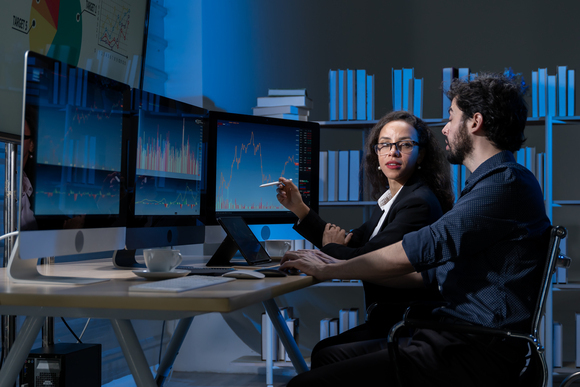
You hear the word ‘data’ all the time, but what does it actually mean as a job? Every time you watch a video, click an ad, buy something online, or scan a QR code, you create data. Companies collect this information in huge amounts. On its own, it’s just a mountain of numbers. But data scientists and data analysts turn that mountain into useful answers.
They collect and clean data, use tools such as Excel, Power BI, Python, or other analytics software, and look for patterns. They help companies understand questions like which products are selling well, where money is being wasted, or which customers are likely to leave (and why they do). Their work helps managers make decisions based on facts, not guesswork.
This role is in demand because almost every industry now relies on data. Banking, retail, logistics, tech, manufacturing, universities–you name it. If a company wants to move faster and smarter, it needs people who can turn raw data into clear insights.
Izzati Safar, a Content Enablement Analyst (Procurement), describes the impact of technology on her work as the precursor to efficient work: “Automation and AI make a big difference. They help cut down manual work, reduce mistakes, and speed things up. For example, things like data checks or report generation can now be automated using tools like Excel Macros or Power Automate. That means less time on repetitive stuff and more time for projects that really matter.”
What she experiences in her role is exactly what happens in many data-driven jobs. Routine checks and reporting can be handled by tools, so people can now focus on deeper analysis, problem-solving, and planning the next steps for the business. This makes their work more impactful and also shows why companies are willing to invest in people with strong data skills.
According to SalaryExpert, in Malaysia, the average data scientist earns about RM163,447 per year, with an average bonus of around RM7,796. The exact amount depends on the company and the role, but these numbers show that the field has strong earning potential.
If you enjoy Mathematics, like patterns and problem-solving, and do not mind spending time with spreadsheets or coding, this could be a strong option for you.
Cybersecurity Specialist

As more of life moves online, there is a growing problem: cybercrime.
Banks, hospitals, schools, online shops, and even small businesses store important information on servers and in the cloud. If hackers break in, the damage can be severe.
Cybersecurity specialists work to prevent this. They secure networks and systems, monitor for suspicious activity, address weaknesses, and respond quickly to cyberattacks. They also help create rules and processes to prevent staff from accidentally opening the door to attackers.
The demand for cybersecurity skills is rising as cyberattacks become more frequent and advanced. A single data breach can cost millions of ringgit and damage a company’s reputation for years. On the surface, losing one piece of data may seem small, but for businesses and corporations, every bit of information can be sensitive and confidential.
In Malaysia, the average cybersecurity specialist earns about RM157,434 a year, with an average bonus of around RM6,722. This range can change depending on your experience, certifications, and the industry in which you work, but it reflects how valuable and high-responsibility this role is. Companies are willing to pay well for people who can protect their systems and prevent costly security failures.
Nurul S. Ridzuan, an Assistant Manager for Technology Risk Management, works in cybersecurity and sees how technology has changed financial services. “My role is to ensure the implementation of these new technologies, such as cloud storage and AI engines, is adopted in a way that does not affect the delivery of these services,” she says. “This includes ensuring the availability of the service, the integrity of the data being stored and processed, as well as the confidentiality of the customers.”
Nurul also understands how fragile systems can become when everything runs on technology. She has seen that many recent service outages in the financial industry come from technology failures rather than human error. Because of this, financial institutions now run regular stress tests on their systems, build backups and redundancies, and regularly review their technology vendors to ensure the services they provide remain reliable and secure.
AI is becoming part of cybersecurity work, too. Still, Nurul gives an important reminder: “The use of AI in cybersecurity analysis allows for clarity in the threat hunting process: a clear SWOT analysis, a holistic threat map, and a risk assessment with an explainable thought process.
On the flip side, you should be careful not to outsource your critical thinking skills. At the end of the day, you cannot blame your calculator for an imperfect score in your mathematics exam. The same goes for your job; if you choose to utilise a tool, you should be sure to review the outcome for accuracy.”
If you like puzzles, enjoy tech, and like the idea of protecting people and systems, this field has strong potential.
Digital Marketing Specialist

Think about the last time a brand caught your attention online. Maybe it was a funny TikTok, a powerful story on Instagram, or a clever ad before a YouTube video.
That is digital marketing in action.
Digital marketing specialists help brands stand out on digital platforms. They plan campaigns, manage social media pages, write posts and ads, work with influencers, and analyse results to see what works. They need to understand both creativity and data, because a pretty poster alone is simply not enough.
This role is in demand because most people now discover products and services online. If a business has no digital presence, it is almost invisible. Companies need people who understand how platforms like Instagram, TikTok, YouTube, Google, and others actually work. Digital marketers in Malaysia typically earn between RM60,000 and RM120,000 per year, depending on experience, industry, and responsibility. Those who can handle both strategy and execution are often more in demand.
Nur Lidiya Binti Zahidin, a Digital Marketing Specialist, keeps a close eye on what creators, brands, and celebrities are doing, because trends can change overnight. She needs to know which names or topics are safe to work with and which might bring risk to a brand. This awareness helps her weigh the benefits and potential backlash before any collaboration.
Leadership and impact also matter to her. She believes the main goal of digital marketing is simple: make the brand look good, but the way you do it can leave a lasting mark. A campaign might be huge, or it might be just one video that changes a local hawker’s life, yet both still count.
At the same time, she is very aware that AI can cut both ways. She has seen small stalls use AI to design banners and logos because it’s cheap or free. This makes AI accessible, but it also shows why people must learn how to use it properly and not rely on it blindly. “Since AI is largely known and used now, it can be like a double-edged sword,” she says. For Lidiya, AI is a strong tool, not a stand-in for human judgment. In digital marketing, it can flag issues, highlight why a post underperformed, or suggest ways to improve. But a human still needs to decide what fits the brand and what feels right for the audience.
If you enjoy social media, creative content, and understanding why people click, share, or buy, digital marketing could be a strong fit.
Healthcare Professionals in Telemedicine

When someone mentions doctors, you would ordinarily imagine people in white coats holding scalpels and forceps. On the other side of the coin, there is telemedicine, where medical consultations are conducted online. This saves time, reduces crowding, and helps people in remote areas get medical advice, prescriptions, and medicine delivered straight to their homes.
Healthcare professionals in telemedicine need both scientific knowledge and confidence with digital platforms. They review digital prescriptions, check drug safety, and make sure every step, from consultation to delivery, is accurate and safe. Nurul Iman, a pharmacist who works in telemedicine, says, “There’s always constant progress to the way we do things, to make them more efficient, less costly, and more accessible.” She explains that digital prescriptions reduce confusion from handwriting and free up healthcare staff to focus on more urgent cases. With platforms such as Doc2US, patients can see a doctor online, receive a digital prescription, and have the nearest pharmacy prepare and deliver the medication to their doorstep.
To stay up to date, Iman keeps up with ongoing education requirements, attends forums and conferences, and uses online resources such as MIMS to keep track of new drugs and treatment guidelines. She believes pharmacists in telemedicine must be “technologically adept, always open to learning new things quickly, and, as always, detail driven.” Even with digital tools and automation, a trained human eye is still needed to catch errors and protect patients.
As telemedicine grows, questions about legal responsibility and data protection become more serious. Iman points out that medical records kept in apps must be properly protected and advises patients to use trusted telemedicine platforms like Doc2US instead of general video call apps for medical consultations.
On automation and AI, she feels it’s helpful because tasks like labelling and dose calculation can be automated, reducing human error and giving pharmacists more time for patient counselling and monitoring treatment.
In Malaysia, healthcare professionals working in telemedicine, such as telepharmacists and doctors providing online consultations, can earn between RM70,000 and RM150,000 a year, depending on their role, qualifications, and experience. This reflects both the responsibility involved and the rising demand for digital healthcare services.
If you enjoy Biology and Chemistry, like helping people, and feel excited about using technology to improve access to healthcare, telemedicine is a path worth considering.
Finding Your Place in This Future
By now, you have seen how roles in data, cybersecurity, digital marketing, and telemedicine are growing in importance. These jobs exist because businesses, governments, and communities need people who can work with technology in smart and responsible ways in 2026 and beyond.
At the same time, they are not the only careers in demand. New roles are emerging in areas such as sustainability and climate action, like sustainability officers, renewable energy engineers, and climate risk analysts. There is also a rising demand for people who can improve how we use technology, such as UX designers, AI specialists, and people who work on digital ethics and online safety. The job market is widening, and many of these roles did not even exist a generation ago.
When you understand this landscape early, you can plan better. You can choose school subjects that match where the world is heading, pick up digital skills, and build human strengths like communication, problem-solving, and empathy. Technology will keep changing how we work, but if you stay curious and pay attention to what the world needs, you will be better prepared not just to find a job, but to build a career that feels meaningful to you.
Got questions? Click here to chat with one of our counsellors on WhatsApp and get tailored advice!


Students
© 2009 - 2016 Afterschool. All Rights Reserved.